Not all prospects are created equal. While some are merely browsing, others are actively researching solutions and preparing to make a purchase decision. The ability to distinguish between casual interest and genuine buying intent can dramatically improve your conversion rates and sales efficiency.
High-intent buyer signals are specific behaviors and cues that indicate a prospect has moved beyond passive interest and is seriously evaluating your solution. These signals help sales and marketing teams prioritize their efforts, personalize their approach, and strike at the optimal moment when prospects are most receptive to conversion.
In this comprehensive guide, we'll explore the science behind buyer intent, break down the most reliable signals to track, and provide actionable strategies for converting high-intent prospects into customers.
Understanding the Psychology of Buyer Intent
Before diving into specific signals, it's crucial to understand what drives high-intent behavior. The buyer's journey isn't linear-it's a complex process where prospects move back and forth between awareness, consideration, and decision stages.
High-intent signals emerge when prospects cross a psychological threshold. They've identified a problem, validated its importance, secured budget or authority, and begun actively comparing solutions. At this stage, their behavior shifts from passive consumption to active evaluation.
Research shows that B2B buyers are typically 57-70% through their purchasing journey before they engage with sales. This means prospects are conducting extensive independent research, and their digital footprints leave valuable clues about their readiness to buy.
The key is recognizing when information-gathering transforms into decision-making. This transition manifests through increased engagement frequency, deeper content consumption, and specific behavioral patterns that signal urgency and commitment.
The Three Categories of High-Intent Buyer Signals
High-intent signals fall into three primary categories, each revealing different aspects of buyer readiness. Understanding these categories helps you build a comprehensive intent detection system.
1. Behavioral Intent Signals
Behavioral signals are observable actions prospects take when researching and evaluating solutions. These are the most quantifiable and trackable indicators of intent.
Repeated website visits: When prospects return to your site multiple times within a short period, especially visiting high-value pages, they're actively considering your solution. Pay particular attention to repeat visits within 24-72 hours.
Pricing page engagement: This is one of the strongest intent signals. Prospects viewing pricing pages are moving from "Can this solve my problem?" to "Can I afford this?" Track not just visits, but time spent and whether they're comparing different pricing tiers.
Demo or trial requests: Nothing signals intent more clearly than a prospect raising their hand to experience your product firsthand. These actions indicate they've narrowed their options and want to validate fit.
Resource downloads: When prospects download case studies, implementation guides, ROI calculators, or technical documentation, they're building a business case. Bottom-of-funnel content downloads indicate advanced research stages.
Feature-specific page views: Prospects spending time on detailed feature pages or technical specifications are evaluating whether your solution meets their specific requirements. This goes beyond general browsing to targeted evaluation.
2. Engagement Intent Signals
Engagement signals reveal how prospects interact with your brand across multiple touchpoints. These indicators show deepening relationship and growing trust.
Email engagement patterns: High open rates combined with click-throughs to specific content pieces indicate active interest. Watch for prospects who engage with multiple emails in sequence or click through to comparison content.
Social media interactions: When prospects move from passive following to active engagement-commenting, sharing, or direct messaging-they're investing emotional energy in your brand. This social proof-seeking behavior often precedes purchase decisions.
Content consumption velocity: Track how quickly prospects consume content after you share it. Immediate engagement signals urgency, while prospects who save content for later may be in earlier stages.
Webinar and event participation: Live event attendance requires significant time investment. Prospects who attend webinars, ask questions, or stay until the end are demonstrating serious interest.
Response rates and times: When prospects reply quickly to outreach and provide detailed responses, they're actively engaged in the evaluation process. Short response times correlate with higher intent.
3. Contextual Intent Signals
Contextual signals provide environmental and situational clues about buying readiness. These often require deeper research but offer powerful predictive value.
Company growth indicators: Funding announcements, new hires in relevant departments, office expansions, or entering new markets all signal potential buying windows. Growing companies have fresh budgets and pressing needs.
Competitive intelligence: When prospects research your competitors alongside your solution, they're in active comparison mode. This is especially strong when they view comparison pages or search for "[your solution] vs [competitor]" content.
Technology stack changes: Companies adopting complementary tools or replacing legacy systems are creating opportunities for your solution. Monitor technology adoption patterns in your prospect's organization.
Regulatory or compliance triggers: Industry changes, new regulations, or compliance requirements often force buying decisions. Understanding these external pressures helps you identify time-sensitive opportunities.
Leadership changes: New executives often bring fresh priorities and budgets. C-suite changes, especially in roles related to your solution's value proposition, can open buying windows.
Key Behavioral Indicators That Signal Purchase Readiness
While understanding signal categories is important, knowing specific behaviors to track is essential for practical implementation. Here are the highest-value indicators that consistently predict conversion.
Repeated Pricing Page Visits
Pricing page visits are among the strongest predictors of purchase intent. Research indicates that prospects who visit pricing pages are 3-5 times more likely to convert than those who don't.
However, not all pricing page visits are equal. Track these specific patterns:
- Multiple visits within a 7-day window (indicates active budget discussions)
- Extended time on page (5+ minutes suggests detailed analysis or sharing with stakeholders)
- Comparison of different pricing tiers (shows they're determining best fit for their needs)
- Pricing page visits followed by case study downloads (building business case for purchase)
- Visits from multiple IP addresses or team members (signals team evaluation)
Pro tip: Set up alerts for prospects who visit your pricing page 2+ times within 72 hours. These hot leads deserve immediate, personalized follow-up.
Deep Content Engagement
Surface-level content consumption is expected at every stage. High-intent prospects engage differently-they dive deep into technical content, implementation details, and success stories.
Look for prospects who:
- Read implementation guides or onboarding documentation before purchase
- Download technical specifications or API documentation
- Spend 10+ minutes reading case studies in their industry
- View multiple product videos or tutorials in one session
- Bookmark or return to specific feature pages multiple times
Content depth matters more than breadth. A prospect reading three blog posts quickly shows less intent than one person spending 30 minutes with your implementation guide.
Competitor Comparison Research
When prospects actively compare your solution against competitors, they've moved from problem awareness to solution evaluation. This is a critical high-intent signal.
Monitor for:
- Visits to comparison pages on your website
- Search queries like "[Your Product] vs [Competitor]"
- Reading reviews on third-party sites (G2, Capterra, TrustRadius)
- Questions about specific differentiators or unique features
- Requests for competitive analysis or comparison documents
These behaviors indicate the prospect has a shortlist and is making final decisions. Your response should focus on differentiation and addressing specific concerns about alternatives.
Trial or Demo Interaction Patterns
How prospects use trials or demos provides rich intent signals. Active, purposeful usage indicates serious evaluation, while passive or minimal engagement suggests lower intent.
High-intent trial users:
- Log in multiple times within the first week
- Invite team members or stakeholders to participate
- Test specific features related to their use case
- Reach out with technical or implementation questions
- Hit usage limits or explore advanced features
- Upload real data or integrate with their existing systems
Track activation metrics and engagement depth. Users who complete key actions or reach "aha moments" in trials are significantly more likely to convert.
Timing Strategies: When to Act on Intent Signals
Identifying intent signals is only half the battle. Timing your response correctly is crucial because buyer intent is perishable-it can fade quickly if not addressed promptly.
The Recency Factor
Intent signals lose predictive power over time. A pricing page visit from yesterday is far more valuable than one from three weeks ago. Research shows that lead response times dramatically impact conversion rates-companies that contact prospects within an hour are 7 times more likely to qualify the lead than those who wait longer.
Segment your intent signals by recency:
Hot (0-24 hours): These signals require immediate action. Prospects are actively researching right now. Respond within hours with personalized outreach that references their specific behavior.
Warm (1-7 days): Still highly valuable but less urgent. These prospects are in active evaluation mode. Follow up within 24-48 hours with relevant resources that move them forward.
Cool (7-30 days): Intent is still present but may be weakening. Use nurture sequences to re-engage and understand what stage they're in now.
Cold (30+ days): Intent has likely faded or the opportunity closed. These prospects need re-qualification before heavy sales investment.
Signal Clustering
Individual signals are useful, but clustered signals-multiple high-intent behaviors occurring close together-are exponentially more predictive of conversion.
Watch for these powerful combinations:
- Pricing page visit + case study download + demo request within 48 hours
- Multiple team members visiting your site in the same day
- Trial activation + technical documentation review + support inquiry
- Competitor comparison research + pricing page visit + LinkedIn engagement
- Repeat visits to specific feature pages + email engagement + content downloads
When you see signal clusters, prioritize these prospects for immediate, high-touch engagement. The concentration of activity indicates they're in active decision-making mode.
Sequential Patterns
The sequence in which prospects engage with content and features reveals their journey stage and next logical step.
Common high-intent sequences include:
- Problem-focused content → Solution education → Feature comparison → Pricing → Demo
- Generic research → Industry-specific case studies → Implementation guides → Technical docs
- Solo website visits → Team member visits → Stakeholder visits → Decision-maker visits
Understanding these sequences helps you anticipate needs and proactively provide the right information at the right time, accelerating the sales cycle.
Language Cues: What Prospects Say Reveals Intent
Beyond behavioral signals, the language prospects use in conversations, emails, and messages provides powerful intent indicators. Skilled sales professionals listen for subtle shifts in phrasing that reveal mental commitment.
Ownership Language
One of the strongest verbal intent signals is when prospects shift from hypothetical to ownership language. This linguistic change indicates they've mentally moved from "considering" to "planning."
Low-intent language: "If we were to implement this..." "What would this look like for a company like ours?" "We're exploring options..."
High-intent language: "When we implement this..." "How will this work with our existing systems?" "What does onboarding look like for our team?"
The shift from "if" to "when" is particularly significant. It signals that the prospect has mentally committed and is now focused on implementation details rather than whether to purchase.
Specificity and Detail
Vague inquiries suggest early-stage research. Specific, detailed questions indicate advanced evaluation and serious consideration.
Low-intent: "Can your tool help with social media?"
High-intent: "We need to send 500 personalized Twitter DMs per day to prospects who mention specific keywords in the last 48 hours. Can your platform handle this volume while staying within Twitter's rate limits?"
The more specific the question, the more deeply the prospect has considered their requirements and how your solution fits.
Budget and Timeline References
When prospects voluntarily mention budget constraints, fiscal year timing, or decision deadlines, they're signaling real buying intent.
Listen for phrases like:
- "We have budget allocated for this quarter..."
- "We need to make a decision by end of month..."
- "What's included in the [specific price point] tier?"
- "Our implementation timeline is..."
- "We're comparing quotes from..."
These statements indicate the prospect has moved beyond research to active procurement.
Stakeholder Involvement Questions
Questions about involving team members, getting executive buy-in, or technical requirements for different users show the prospect is building internal consensus.
High-intent phrases include:
- "What information would you need to present to our CFO?"
- "Can we get our IT team on a call to discuss integration?"
- "Do you have a presentation we could share with stakeholders?"
- "What's the process for adding team members?"
These questions reveal that the prospect is navigating internal approval processes-a key step toward purchase.
Implementing an Intent Detection System
Understanding intent signals is valuable only if you can systematically detect and act on them. Here's how to build a practical intent detection system for your organization.
Technology Stack for Intent Detection
Modern intent detection requires combining multiple tools and data sources:
Website analytics: Use platforms like Google Analytics, Mixpanel, or Heap to track page visits, time on site, and user journeys. Set up custom events for high-value actions like pricing page visits or resource downloads.
CRM integration: Connect behavioral data to your CRM to enrich prospect records with intent signals. This ensures sales teams see relevant activity when engaging prospects.
Marketing automation: Platforms like HubSpot, Marketo, or ActiveCampaign can track email engagement and trigger workflows based on intent signals.
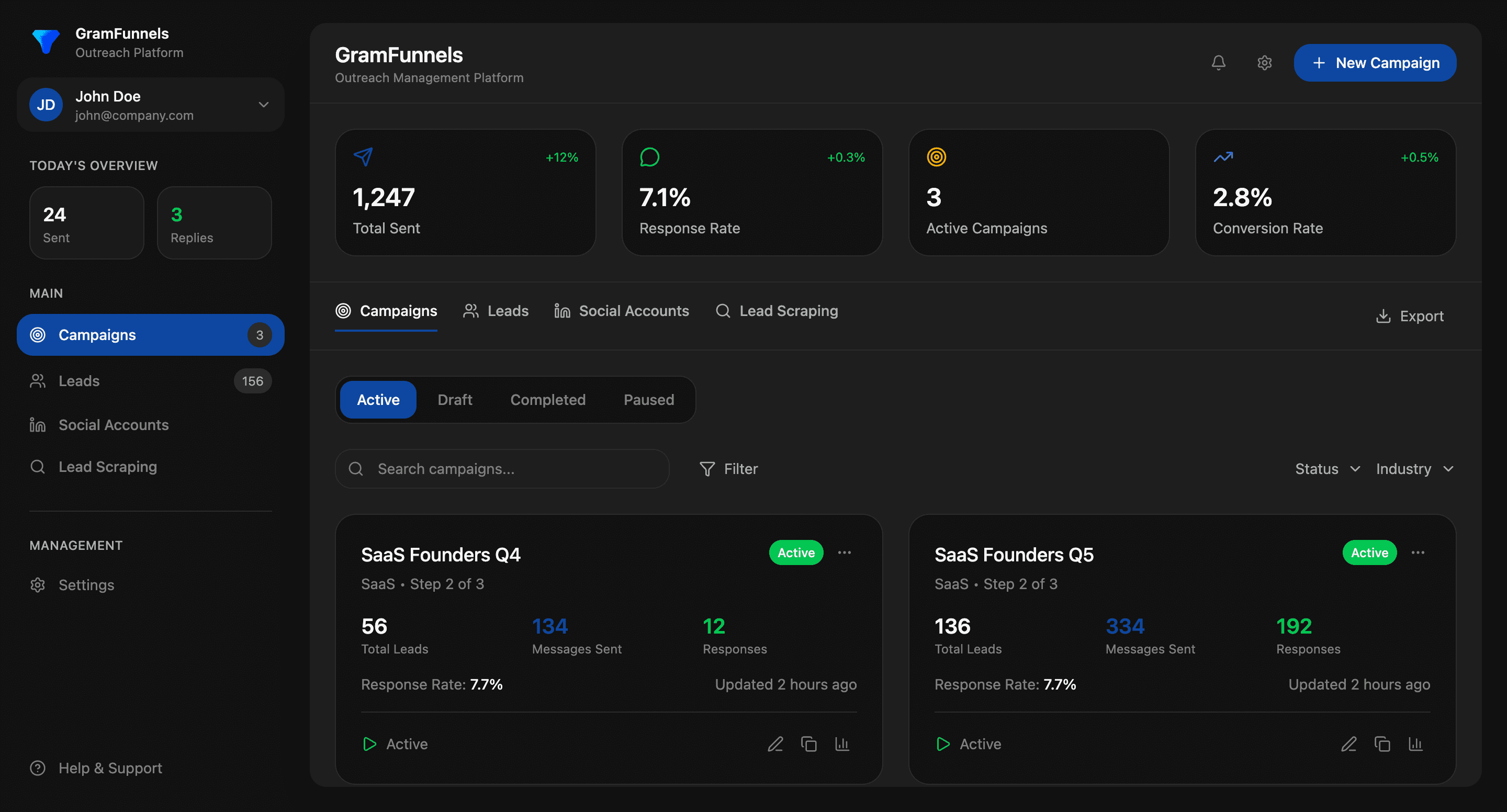
Sales engagement tools: Solutions like GramFunnels help identify and engage high-intent prospects on Twitter/X through keyword monitoring and automated outreach, capturing intent signals from social conversations.
Intent data providers: Third-party platforms like Bombora, 6sense, or G2 offer intent data based on content consumption across the web, providing signals beyond your owned channels.
Scoring and Prioritization
Not all intent signals are equally predictive. Implement a weighted scoring system to prioritize prospects effectively.
Assign point values based on signal strength:
- Pricing page visit: 25 points
- Demo request: 50 points
- Case study download: 15 points
- Competitor comparison page: 20 points
- Technical documentation view: 15 points
- Email click-through: 10 points
- Social media engagement: 5 points
- Trial activation: 40 points
Include time decay-signals lose value over time. A pricing page visit yesterday is worth full points, but one from two weeks ago might be worth only 50%.
Set thresholds for action: 75+ points = hot lead requiring immediate outreach, 40-74 points = warm lead for nurture sequences, 0-39 points = standard marketing cadence.
Alert and Workflow Automation
Manual monitoring doesn't scale. Automate intent detection with smart alerts and workflows.
Set up real-time notifications for:
- Any prospect visiting pricing page 2+ times in 72 hours
- Trial users hitting key activation milestones
- Multiple team members from same company visiting within 24 hours
- High-value content downloads (implementation guides, technical docs)
- Prospects returning after 30+ days of inactivity
Create automated workflows that trigger based on intent thresholds:
- Send personalized email when prospect crosses 50-point threshold
- Assign to sales rep when score reaches 75 points
- Add to high-intent nurture sequence for 40-74 point prospects
- Schedule follow-up tasks for sales team based on specific behaviors
Team Training and Alignment
Technology alone isn't enough. Your team needs training to recognize and respond to intent signals effectively.
Conduct regular training on:
- What constitutes high-intent vs. low-intent behavior
- How to personalize outreach based on specific signals
- Response time expectations for different intent levels
- Questions to ask that reveal unstated buying intent
- How to progress prospects from one intent stage to the next
Create playbooks for different intent scenarios. For example, if a prospect visits your pricing page twice but doesn't request a demo, what's the appropriate next step? Having documented plays ensures consistent, effective responses.
Converting High-Intent Prospects: Best Practices
Identifying intent is pointless without effective conversion strategies. Here's how to turn high-intent signals into closed deals.
Personalization at Scale
High-intent prospects expect relevant, personalized communication. Generic outreach wastes the opportunity their signals create.
Reference specific behaviors in your outreach: "I noticed you've been exploring our enterprise pricing options and downloaded our ROI calculator. I'd love to understand your specific use case and show you how [similar company] achieved [specific result] with our platform."
This approach demonstrates attentiveness and provides immediate relevance, dramatically improving response rates.
Remove Friction
When prospects show high intent, eliminate barriers to conversion. Make it absurdly easy for them to take the next step.
Strategies include:
- Offer to schedule demos immediately without forms or qualifications
- Provide instant trial access without credit card requirements
- Share pre-built implementation plans for their use case
- Offer flexible contract terms or pilot programs to reduce risk
- Provide direct access to decision-makers or technical experts
Every additional step or requirement risks losing momentum. Streamline the path from intent to conversion.
Create Urgency (Authentically)
High-intent prospects are ready to act, but they may still delay without a compelling reason to move now.
Authentic urgency creators:
- Limited-time incentives aligned with their fiscal calendar
- Highlighting competitive risks of delayed implementation
- Quantifying cost of inaction specific to their situation
- Showcasing seasonal opportunities or market timing
- Emphasizing implementation timelines and time-to-value
Avoid manufactured scarcity or pressure tactics. Focus on genuine business reasons to act promptly.
Address Unstated Concerns
High-intent prospects who don't convert often have unstated concerns preventing commitment. Proactively address common blockers.
Typical concerns include:
- Implementation complexity and resource requirements
- Integration with existing systems
- Team adoption and change management
- ROI proof and success metrics
- Contract flexibility and commitment length
- Support and onboarding quality
Create resources that preemptively address these concerns. Share implementation timelines, integration documentation, change management guides, and customer success stories that mirror their situation.
Measuring and Optimizing Your Intent Detection
Like any system, intent detection requires continuous measurement and refinement to improve accuracy and effectiveness.
Key Metrics to Track
Monitor these metrics to evaluate your intent detection system:
Signal accuracy: What percentage of prospects flagged as high-intent actually convert? Track conversion rates by intent score ranges to validate your scoring model.
Response time: How quickly does your team engage high-intent prospects? Measure from signal detection to first outreach.
Signal-to-close velocity: How long from first intent signal to closed deal? This helps identify bottlenecks in your sales process.
False positive rate: How often do high-intent signals fail to result in conversion? High false positive rates suggest your scoring needs adjustment.
Coverage: What percentage of closed deals showed detectable intent signals? Low coverage means you're missing important signals.
Continuous Improvement Process
Regularly review and refine your intent detection system:
Conduct quarterly analyses of which signals most reliably predict conversion. Adjust scoring weights based on actual conversion data.
Interview recent customers about their buying journey. Ask what drove their decision and when they knew they were ready to buy. Compare their answers to the signals you detected.
Test new signal types and thresholds. Run A/B tests on different response strategies to optimize conversion rates.
Share learnings across teams. Sales can provide qualitative insights about prospect readiness that marketing might miss in behavioral data.
Common Mistakes to Avoid
Even sophisticated organizations make preventable mistakes when implementing intent detection systems.
Over-reliance on single signals: No single behavior perfectly predicts conversion. Look for patterns and clusters rather than reacting to isolated actions.
Ignoring negative intent signals: Watch for disengagement patterns too. Declining email opens, reduced site visits, or trial abandonment signal problems that need addressing.
Delayed response: Intent is time-sensitive. Waiting days to follow up on hot signals dramatically reduces conversion probability.
One-size-fits-all approach: Different industries, deal sizes, and buyer personas show intent differently. Segment your scoring and response strategies accordingly.
Neglecting context: A small business owner visiting your enterprise pricing page likely has different intent than an enterprise buyer doing the same. Consider firmographic and demographic context.
Forgetting the human element: Data should inform decisions, not replace judgment. Train teams to combine quantitative signals with qualitative assessment.
Conclusion: Turning Intent into Revenue
The ability to identify and act on high-intent buyer signals represents a significant competitive advantage. Companies that master intent detection focus their resources where they matter most, shorten sales cycles, and improve conversion rates.
Success requires three elements: comprehensive signal detection across multiple channels, systematic scoring and prioritization based on data-driven models, and rapid, personalized response that addresses prospect needs at the right moment.
Start by implementing basic tracking for the highest-value signals-pricing page visits, demo requests, and competitor research. Build from there as you learn what predicts conversion in your specific market.
Remember that buyer intent isn't static. Prospects move in and out of high-intent phases based on changing priorities, competitive factors, and internal dynamics. Continuous monitoring and timely engagement are essential.
The organizations that win aren't necessarily those with the best product or lowest price. They're the ones who recognize buying signals early, respond appropriately, and make it easy for ready buyers to say yes.
For Twitter/X outreach specifically, tools like GramFunnels can help you identify high-intent prospects through keyword monitoring and automated engagement, capturing buying signals from social conversations and turning them into qualified opportunities. To dive deeper into platform-specific strategies, explore our guide on LinkedIn High Intent Signals in 2026 for complementary social selling tactics.
The question isn't whether your prospects are showing intent-they are. The question is whether you're watching closely enough to notice, and acting quickly enough to capitalize on those critical moments when buyers are ready to commit.