Not all leads are created equal. While most sales teams waste time chasing cold prospects who might buy someday, smart businesses focus on high intent leads-prospects actively showing buying signals right now.
The difference is dramatic. According to Forrester Research, companies that excel at lead nurturing generate 50% more sales-ready leads at 33% lower cost. But here's the real insight: they're not just nurturing better-they're targeting smarter from the start.
This guide will show you how to identify, target, and convert high intent leads with strategies that transform your sales efficiency.
What Are High Intent Leads?
High intent leads are prospects demonstrating active buying behavior through specific, measurable actions that indicate they're researching solutions, evaluating vendors, or ready to make a purchase decision.
Unlike traditional lead qualification based on demographics or job titles, high intent focuses on behavioral signals. These are people who aren't just vaguely interested-they're actively solving the problem you address.
The Three Levels of Buyer Intent
Understanding intent requires recognizing that not all signals carry equal weight:
- Low Intent: Passive information gathering (reading general industry content, following companies on social media)
- Medium Intent: Active problem exploration (downloading comparison guides, attending webinars, engaging with educational content)
- High Intent: Evaluation and decision-making (requesting demos, comparing pricing, engaging with competitor content, asking specific implementation questions)
The key to effective prospecting is identifying prospects in the high intent stage before your competitors reach them.
Why High Intent Leads Transform Sales Performance
Targeting high intent leads fundamentally changes your sales economics. Here's why this approach delivers measurably better results:
Dramatically Higher Conversion Rates
When you reach prospects already showing buying behavior, conversion rates jump significantly. Research from Demand Gen Report shows that leads nurtured with targeted content produce a 20% increase in sales opportunities compared to non-nurtured leads.
But high intent targeting goes further: you're not starting from zero awareness. These prospects already understand their problem and are actively seeking solutions. Your job shifts from educating to demonstrating fit.
Shorter Sales Cycles
High intent leads move faster through your pipeline because they've already completed much of their research independently. According to Gartner, B2B buyers are 57% through their purchase decision before engaging with sales.
When you intercept prospects showing high intent signals, you're entering conversations with people who have completed their initial research and are ready for substantive discussions about implementation, pricing, and timelines.
Better Resource Allocation
Sales and marketing teams have finite resources. Every hour spent pursuing a prospect with low purchase intent is an hour not spent with someone ready to buy.
High intent targeting allows you to focus your best resources-your top sales talent, customized demonstrations, executive involvement-on prospects most likely to convert. This concentration of effort yields exponentially better returns.
Improved Customer Quality
Prospects who show genuine buying intent before you reach out typically become better customers. They've done their research, understand what they need, and have realistic expectations about implementation and results.
This leads to higher satisfaction rates, lower churn, and better long-term customer lifetime value compared to customers convinced through aggressive sales tactics when they weren't ready to buy.
How to Identify High Intent Leads
Identifying high intent requires systematic tracking of behavioral signals across multiple channels. The most effective approach combines technology with strategic thinking about where your buyers show purchase intent.
LinkedIn Engagement Signals
For B2B businesses, LinkedIn provides a goldmine of intent data. Prospects actively researching solutions leave clear behavioral trails:
- Competitor Engagement: Commenting on or sharing competitor posts, following competitor company pages, celebrating partnerships with competitor solutions
- Problem-Focused Activity: Posting about challenges your solution addresses, asking for recommendations in relevant areas, sharing frustration with current tools or processes
- Solution Research: Engaging with content about specific methodologies, best practices, or implementation strategies related to your category
- Job Changes: Recently starting roles where your solution would be valuable (new sales leaders often evaluate tech stacks, new marketing directors review tool consolidation opportunities)
- Company Signals: Organizations announcing funding rounds, expansion plans, new product launches, or other growth indicators that trigger tool evaluation
For a comprehensive breakdown of these signals and how to track them effectively, see our guide on How to Identify High-Intent Buyer Signals: A Complete Guide.
Content Consumption Patterns
The content prospects consume reveals their position in the buying journey. High intent leads engage with bottom-of-funnel content:
- Comparison pages and versus articles
- Pricing and ROI calculators
- Implementation guides and technical documentation
- Case studies in their specific industry or use case
- Demo videos and product walkthroughs
Modern marketing automation platforms and website analytics tools can track these behaviors and score leads accordingly. Set up alerts for prospects who view multiple high-intent pages in a short timeframe.
Search Intent and Keywords
Search behavior provides powerful intent signals. Monitor for prospects searching for:
- "[Your Category] pricing"
- "Best [Your Category] for [Specific Use Case]"
- "[Competitor Name] vs [Another Competitor]"
- "[Your Category] implementation"
- "How to switch from [Current Solution] to [Alternative]"
While you can't always identify individual searchers, these patterns inform where high intent leads congregate and what content will attract them.
Technographic Data
For B2B sales, the technology stack a company uses reveals significant intent information:
- Companies using complementary tools are more likely to need your solution
- Companies on legacy versions of competitive products may be ready to switch
- Technology combinations that create inefficiencies signal openness to consolidation
Tools like BuiltWith, Datanyze, and LinkedIn Sales Navigator can help identify companies based on their technology usage.
Strategies for Reaching High Intent Leads
Identifying high intent leads is only half the equation. The next step is reaching them with relevant messaging at the right moment-before competitors do.
Intent-Based LinkedIn Outreach
LinkedIn remains the most effective channel for B2B high intent targeting because it's where professionals actively demonstrate buying signals.
The key is systematic monitoring and rapid response:
- Set Up Signal Tracking: Create saved searches and alerts for prospects engaging with competitor content, posting about relevant problems, or showing other intent signals
- Personalize Based on Intent: Reference the specific signal that triggered your outreach ("I noticed your comment on [Competitor's] post about [specific challenge]...")
- Provide Immediate Value: Share a specific resource, insight, or alternative perspective related to their expressed interest
- Make the Ask Clear: High intent prospects don't need lengthy nurture sequences-they're ready for substantive conversations
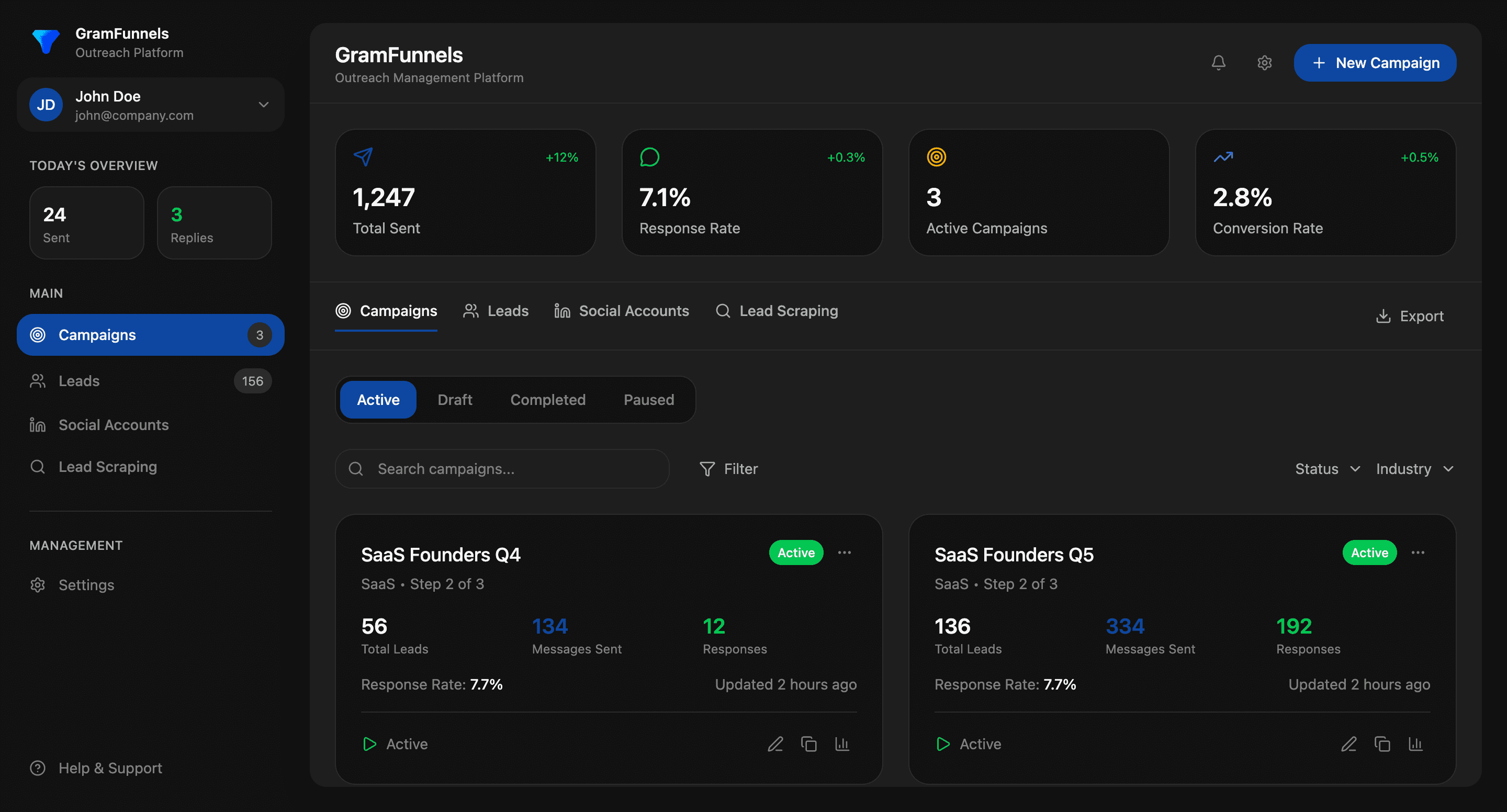
For businesses scaling this approach, platforms like GramFunnels automate the monitoring of over 300 intent signals across LinkedIn, identifying prospects showing active buying behavior and enabling outreach through infrastructure that protects your personal LinkedIn account reputation.
For alternatives to traditional prospecting tools, explore our analysis of Top 5 Sales Navigator Alternatives for Effective Lead Generation.
Retargeting Website Visitors
Prospects who visit your website-especially those viewing high-intent pages-deserve immediate follow-up attention:
- Deploy LinkedIn Matched Audiences to retarget website visitors with specific messaging based on pages viewed
- Use reverse IP lookup tools to identify companies visiting your site, then reach out to relevant decision-makers
- Set up chatbots that trigger on high-intent pages with offers for immediate conversations
- Create email workflows specifically for prospects who view pricing, demo, or comparison pages
The goal is to start conversations while your solution is top-of-mind, not weeks later when they've moved on to other options.
Account-Based Marketing for High Intent Accounts
When you identify accounts showing multiple intent signals across various stakeholders, deploy focused ABM campaigns:
- Map the Buying Committee: Identify all relevant decision-makers and influencers at the target account
- Coordinate Multi-Channel Touchpoints: Combine LinkedIn outreach, targeted advertising, personalized email, and even direct mail
- Customize Messaging by Role: Different stakeholders care about different aspects of your solution
- Accelerate with Direct Engagement: When signals indicate active evaluation, request executive-to-executive conversations
This intensive approach only makes sense for high intent accounts where multiple signals indicate serious buying interest.
Content Syndication and Guest Posting
Place your content where high intent prospects are already researching:
- Contribute guest posts to industry publications covering buying guides and solution comparisons
- Syndicate content to third-party sites where prospects research solutions
- Participate in relevant online communities and forums with helpful, non-promotional contributions
- Sponsor content on platforms where your ideal customers actively seek solutions
The objective is visibility at the exact moment prospects are evaluating options, not broad awareness.
Converting High Intent Leads: Best Practices
High intent leads require a different sales approach than cold prospects. They're further along the journey and expect more substantive conversations.
Respond With Urgency
Speed matters dramatically with high intent leads. Research from Harvard Business Review shows that companies that contact prospects within an hour are nearly 7 times more likely to qualify the lead than those that wait even 60 minutes.
High intent prospects are actively evaluating multiple options. The first solution that delivers a relevant, timely response often wins simply by being present during the decision-making process.
Set up systems that alert your team to high intent signals in real-time. Prioritize these conversations above routine tasks.
Match Your Message to Their Intent Level
Different intent signals warrant different messaging approaches:
- Problem Exploration Signals: Lead with educational content that helps them better understand their challenge and evaluation criteria
- Solution Research Signals: Focus on differentiation, unique capabilities, and proof points that address their specific use case
- Vendor Evaluation Signals: Provide pricing transparency, implementation timelines, and direct comparisons that facilitate decision-making
The mistake many sales teams make is treating all leads the same. High intent leads don't need awareness-building-they need decision-support.
Provide Immediate Value
Rather than asking high intent prospects for their time, offer something valuable upfront:
- A custom analysis of their specific situation
- A relevant case study showing results for similar companies
- A framework or tool that helps them evaluate options
- An introduction to a customer in their industry
This approach demonstrates expertise and builds trust faster than traditional discovery calls.
Remove Friction From the Buying Process
High intent leads want to move quickly. Eliminate obstacles:
- Offer flexible demo scheduling with immediate availability
- Provide transparent pricing early in conversations
- Share implementation timelines and resource requirements upfront
- Create streamlined contract processes for faster closing
- Assign dedicated resources to high intent opportunities
Every day of delay in your sales process is an opportunity for competitors to win the deal.
Measuring High Intent Lead Performance
To optimize your high intent strategy, track metrics that reflect both identification accuracy and conversion effectiveness:
Key Performance Indicators
- Intent Signal to Conversation Rate: What percentage of identified high intent leads accept outreach and engage in conversations?
- Conversation to Opportunity Rate: How many initial conversations with high intent leads advance to qualified opportunities?
- Opportunity to Close Rate: Do high intent leads close at higher rates than traditionally sourced leads?
- Sales Cycle Length: Compare the time from first contact to closed deal for high intent versus standard leads
- Customer Acquisition Cost: Calculate the full cost of acquiring customers through high intent strategies versus other channels
- Customer Lifetime Value: Do customers acquired through high intent targeting demonstrate better retention and expansion?
Signal Quality Assessment
Not all intent signals predict buying behavior equally well. Continuously assess which signals most reliably indicate actual purchase readiness:
- Track conversion rates by signal type (competitor engagement vs. problem posting vs. content consumption)
- Identify signal combinations that indicate the highest intent
- Adjust your targeting criteria based on observed performance
- Refine your definition of high intent as you gather more data
This iterative approach ensures your high intent targeting becomes more accurate over time.
Common Mistakes to Avoid
Even with high intent leads, certain mistakes can derail conversion:
Treating Intent Like Magic
Intent signals don't guarantee sales. They indicate increased likelihood of purchase. Some high intent leads are gathering information for future purchases, exploring options they can't currently afford, or researching for someone else.
Qualify properly even when intent signals are strong. Confirm budget, timeline, authority, and need.
Ignoring Intent Timing
Intent signals decay quickly. A prospect commenting on competitor content today may sign with that competitor tomorrow. The value of intent data diminishes rapidly with time.
Build systems that enable rapid response. Delayed outreach to high intent leads often finds they've already made decisions.
Over-Automating the Approach
While automation helps identify and reach high intent leads at scale, purely automated outreach rarely converts the most valuable opportunities.
Use automation to identify prospects and initiate contact, but transition to personalized, human engagement quickly-especially for high-value opportunities.
Neglecting Lead Nurturing
Not every high intent lead is ready to buy immediately. Some are in early evaluation stages with long decision timelines.
Build nurture tracks specifically for high intent leads that provide ongoing value without aggressive selling. Stay present throughout their evaluation without being pushy.
The Future of High Intent Targeting
High intent lead identification is becoming more sophisticated as data sources expand and AI improves pattern recognition.
Emerging Trends
- AI-Powered Intent Prediction: Machine learning models that predict buying intent before explicit signals appear, based on patterns in historical data
- Cross-Platform Intent Aggregation: Systems that combine signals from LinkedIn, web behavior, search data, and technographic information for more accurate intent scoring
- Real-Time Intent Monitoring: Instant alerts when prospects show high intent signals, enabling immediate response
- Predictive Intent Windows: Models that identify when specific accounts are most likely to enter buying cycles based on seasonal patterns, trigger events, and market conditions
For the latest insights on LinkedIn-specific intent targeting, see our comprehensive guide: LinkedIn High Intent Signals in 2026: Complete Targeting Guide.
Building Your High Intent Strategy
Implementing effective high intent targeting requires systematic approach:
- Define Your Intent Signals: Based on your specific business, identify the 10-15 most reliable indicators that prospects are actively evaluating solutions in your category
- Set Up Monitoring Systems: Deploy tools and processes that track these signals across relevant channels (LinkedIn, your website, industry forums, review sites)
- Create Response Playbooks: Develop specific outreach templates and conversation frameworks for each intent signal type
- Assign Ownership: Designate team members responsible for monitoring, outreach, and conversion of high intent leads
- Measure and Optimize: Track performance metrics, identify what works, and continuously refine your approach
Start small with one or two high-value intent signals. Prove the model works, then expand to additional signals and channels.
Conclusion
High intent leads represent the most efficient path to revenue growth. By focusing on prospects already showing active buying behavior, you dramatically improve conversion rates, shorten sales cycles, and allocate resources more effectively.
The key is systematic identification of genuine intent signals, rapid response with relevant messaging, and sales processes optimized for prospects who are ready to have substantive conversations.
As B2B buying continues its shift toward digital-first research, the ability to identify and reach high intent leads before competitors becomes increasingly critical. Companies that master this approach will consistently outperform those still relying on traditional cold outreach and broad-based lead generation.
Start by mapping where your ideal customers show buying intent, set up monitoring for those signals, and build processes that enable your team to respond immediately when prospects demonstrate they're ready to buy.
For a broader perspective on how high intent targeting fits within modern sales strategies, explore our guide on Understanding Outbound Sales: Meaning, Strategies, and Benefits.