Sales Development Representatives (SDRs) are the backbone of modern B2B sales organizations. On X (formerly Twitter), where decision-makers are actively engaged, SDRs have a unique opportunity to build pipelines at scale. But without a structured playbook, even the best SDR efforts devolve into ad-hoc outreach that wastes time and frustrates leads.
An effective SDR playbook for X isn't just a collection of scripts-it's a comprehensive framework that guides daily activities, tracks progress against quotas, and ensures consistent pipeline generation. This guide walks you through building a winning SDR playbook tailored to X outreach.
What Is an SDR Playbook?
An SDR playbook is a documented set of processes, sequences, and best practices that define how your sales development team operates. It answers critical questions:
- What does a typical SDR day look like?
- How many touches should each lead receive?
- What messaging resonates with your target audience?
- When do you move prospects to the next stage?
- How do you measure success against quota?
On X, an SDR playbook becomes even more valuable because the platform moves fast. A documented playbook ensures your team stays aligned, maintains brand voice consistency, and avoids costly mistakes like account bans due to aggressive automation practices.
Research from Pavilion's 2024 State of Sales Development shows that teams with documented processes achieve 23% higher quota attainment than those without. Having a playbook isn't optional-it's foundational to scaling SDR productivity.
Core Components of Your Daily SDR Routine on X
A structured daily routine is the engine of your SDR playbook. Here's what high-performing teams are doing:
Morning Prep Phase (8:00 AM - 9:00 AM)
- List review: Identify your top 10-15 priority prospects for the day based on engagement potential and fit scoring.
- Content consumption: Review trending topics in your industry on X. This provides valuable context for personalization and helps you understand what prospects care about.
- Script preparation: Customize your DM templates based on prospect research. Generic messaging tanks on X-personalization is non-negotiable.
- CRM alignment: Check for follow-ups, calendar holds, or leads showing buying signals from previous conversations.
Active Outreach Phase (9:00 AM - 12:00 PM)
- Prospecting work: Execute your primary outreach activity. This typically means sending 15-25 personalized DMs to warm prospects or cold leads with strong fit scores.
- Engagement: Comment meaningfully on 5-10 posts from target accounts. This builds credibility and primes prospects for your DM.
- Relationship building: Respond to conversations, answer questions, and provide value. This positions you as a resource, not just a salesperson.
Midday Check-In (12:00 PM - 1:00 PM)
- Review inbound responses and prioritize hot leads.
- Update CRM with activity and engagement metrics.
- Adjust messaging based on early feedback or rejection patterns.
Afternoon Engagement Phase (1:00 PM - 4:00 PM)
- Follow-up sequences: Execute step two or three of your cadence for prospects who haven't engaged yet.
- Objection handling: Respond to hesitations or objections from warm prospects.
- Qualification calls: Conduct discovery calls with qualified leads who've expressed interest.
End-of-Day Close (4:00 PM - 5:00 PM)
- Log all activities in your CRM with accurate engagement data.
- Review daily metrics against quota targets.
- Prepare priority list for the next day.
- Document any feedback or script refinements needed.
This routine is systematic without being rigid. The key is consistency-your team should know exactly what to expect from an SDR day on X.
Setting and Managing Quotas for X Outreach
Quota structure directly impacts SDR behavior and results. On X, activity-based quotas work better than arbitrary call counts because the platform has different dynamics than phone outreach.
Recommended Quota Metrics for X SDRs
- Outreach touches per day: 20-30 personalized DMs sent (not blasted). Quality over volume.
- Engagement rate: 10-15% of outreach generates responses within 48 hours.
- Qualified opportunities per week: 3-5 leads move to sales-qualified lead (SQL) stage.
- Booked calls per month: 8-12 qualified discovery calls scheduled per SDR.
- Response-to-meeting rate: 25-35% of engaged prospects move to a call.
Why these numbers? X conversations are warmer than cold email but require higher personalization investment. You can't send 100 generic DMs daily and expect traction. Instead, focus on quality prospects and measured cadence.
Tracking Quota Progress
Use a simple framework to monitor daily progress:
| Activity | Daily Target | Weekly Quota | Monthly Goal |
| DMs Sent | 25 | 125 | 500 |
| Responses | 2-3 | 12-15 | 50-60 |
| Qualified Leads | 0.5-1 | 3-5 | 12-20 |
| Booked Calls | 0.2-0.4 | 1-2 | 8-12 |
Share this dashboard with your SDR team weekly. Transparency builds accountability and helps you identify coaching opportunities before the month ends.
Proven SDR Scripts and Templates for X
Scripts are the foundation of your playbook, but on X, they must be conversational and personalized. Here are three proven templates that work:
Template 1: The Value-First Approach
Hi [Name], saw your recent thread about [specific topic]. Your point on [specific insight] resonated-you're thinking about this the right way.

We've helped similar companies [brief outcome]. Would be worth 15 mins to explore if there's a fit?

[CTA: Calendly link]
This template works because it:
- References specific content they've shared (shows genuine interest)
- Validates their thinking (builds rapport)
- Provides concrete proof point (builds credibility)
- Includes a low-friction CTA (increases acceptance)
Template 2: The Curiosity-Driven Opener
Hey [Name],

Quick question: are you seeing [common challenge] as a priority this year?

We just ran a report on how [your industry] companies are tackling this, and the findings were surprisingly different from what most teams expect.

Thought of you. Let me know if worth a quick sync.

[CTA]
This works because it:
- Starts with a genuine question (not a pitch)
- Creates curiosity with the report hook
- Positions you as a trusted advisor (not a vendor)
- Makes it easy to say yes with low commitment
Template 3: The Social Proof Play
Hi [Name],

I noticed [specific achievement/company milestone] congrats!

We work with [similar company] and they recently improved [relevant metric] by [%]. Given your focus on [their goal], thought this might be relevant.

Worth exploring?

[CTA]
This resonates because it:
- Acknowledges a genuine achievement (shows homework)
- Provides timely social proof (overcomes skepticism)
- Connects their goals to your outcomes (relevant and specific)
- Gives them an easy decision point
For deeper guidance on crafting high-converting messages, check out our complete guide to DM templates and scripts for cold outreach.
Building Your Multi-Touch Cadence
A single DM isn't a strategy. High-performing SDRs use sequenced messaging that respects prospect preferences while maintaining consistent presence.
The 5-Touch Standard Cadence
- Touch 1 (Day 0): Personalized initial DM using one of the templates above. Wait 2-3 days before next touch.
- Touch 2 (Day 3-4): Add value without being pushy. Share a relevant article, insight, or resource. Include a gentle call-to-action.
- Touch 3 (Day 7-8): Reference their profile or content again. Frame as "checking in" rather than "following up." Consider a different angle if the first didn't land.
- Touch 4 (Day 12-14): Last substantive touch. Make your value proposition crystal clear. Include a time-bound offer or limited resource.
- Touch 5 (Day 18-20): Final touch before nurturing or archiving. Often best done via a meaningful reply to their tweets or engagement rather than another DM.
This cadence respects platform dynamics-X conversations move fast, so spacing touches over 20 days prevents looking spammy while maintaining visibility. Most SDRs see 60-70% of responses come after touch 2 or 3, not the initial outreach.
Learn more about optimizing your sequence timing in our guide to DM sequences and cadence for high-converting X outreach.
Personalizing at Scale Without Losing Authenticity
The biggest trap SDRs fall into on X: treating personalization as a checkbox rather than a mindset. "Hey [FirstName]" isn't personalization-it's lazy automation.
Three Levels of Personalization
Level 1: Basic (Minimum effort)
Reference something specific about their company, industry, or recent activity. Takes 2 minutes per prospect.
"Saw you just funded your Series B-congrats! Scaling revenue ops is probably top of mind."Level 2: Intermediate (Recommended)
Reference specific content they've shared, acknowledge their perspective, and frame your value proposition in their language.
"Your thread last week on [topic] highlighted the exact pain we're helping [similar company] solve. They reduced [metric] by X%-curious if that's a focus for you too."Level 3: Advanced (High-touch)
Deep prospect research, unique angles, and tailored social proof. Reserved for high-value accounts.
"[Name]-noticed you're building out the revenue team at [company]. We recently worked with [competitor on similar hires], and they told us [specific challenge]. Thought it might resonate given your background in [their background]. Worth a 15-min call?"Aim for Level 2 personalization as your baseline. It's the sweet spot between effort and effectiveness. Your open rates and response rates will thank you.
Managing Compliance and Safety in Your Playbook
A playbook that ignores X's platform rules won't scale-it'll get your accounts banned. Build compliance into your DNA:
Non-Negotiable Rules
- No mass follow/unfollow: Automated follow/unfollow patterns trigger X's spam filters. Focus on quality connections, not quantity.
- Respect rate limits: X has strict rate limiting on DMs. Check our guide on safe automation settings for personalization at scale to stay within boundaries.
- Authentic engagement first: Your SDRs should engage organically (likes, replies, retweets) before sending DMs. This builds account reputation and improves response rates.
- Personalization over templates: Generic, repeated messaging gets flagged as spam. Every outreach should be unique to the recipient.
- Document your cadence: Make sure your playbook clearly defines touchpoint spacing and messaging variation. This protects you if X ever audits your account.
For comprehensive details on compliance best practices, reference our social media automation compliance updates for 2025.
Measuring and Iterating Your Playbook
A playbook should evolve based on data. Track these metrics monthly and refine your templates, scripts, and cadences:
Key Performance Indicators
- Response rate: Responses ÷ DMs sent. Benchmark: 8-15% indicates strong personalization and messaging.
- Meeting rate: Meetings booked ÷ responses received. Benchmark: 25-40% shows good qualification and call skills.
- Conversion rate (end-to-end): Meetings booked ÷ DMs sent. Benchmark: 2-5% is solid for cold outreach on X.
- CRM stage velocity: Days from SQL to demo scheduled. Lower is better-it indicates healthy sales process.
- Script performance: Compare response rates by template. Double down on what works; retire what doesn't.
Use monthly playbook reviews to make small adjustments. If a particular script template underperforms across multiple SDRs, retire it. If one SDR consistently outperforms on response rate, have them mentor others.
Tools That Support Your SDR Playbook
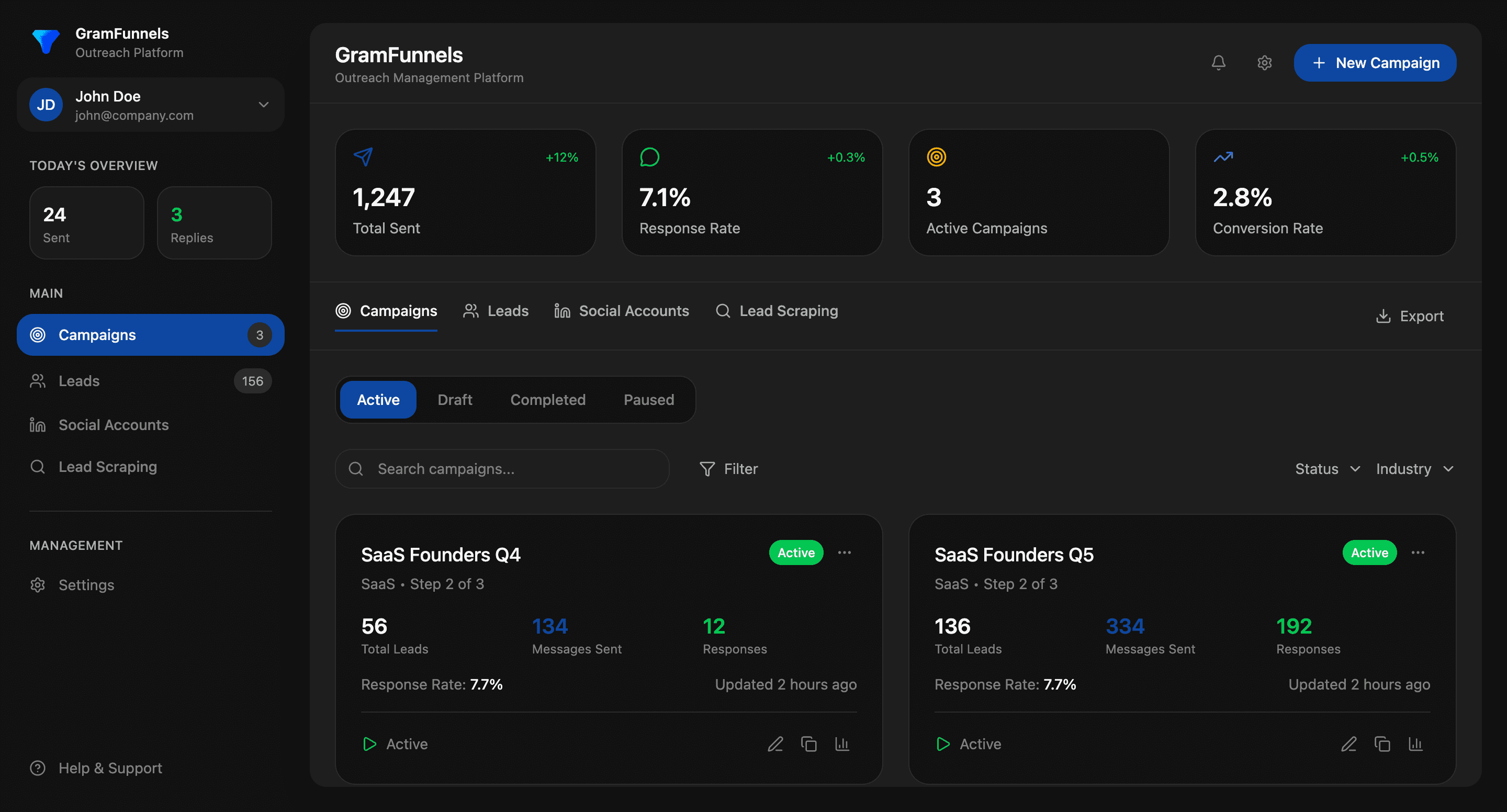
The right technology amplifies playbook execution without compromising authenticity. Most high-performing SDR teams use automation to handle tedious tasks-logging activities, scheduling follow-ups, and managing cadences-so SDRs can focus on personalization and relationship building.
Platforms designed specifically for X outreach enable safe, compliant automation that respects platform rules while scaling your team's impact. Look for tools that support:
- Personalized DM sending at scale
- Keyword-based lead targeting and qualification
- Automated but customizable cadences
- CRM integrations for seamless activity logging
- Rate limiting and compliance safeguards built-in
For a detailed comparison of options, check out our guide to best DM automation tools for sales teams in 2025.
Common Playbook Mistakes to Avoid
Mistake 1: Treating all prospects the same
Not all leads are created equal. Your playbook should differentiate between warm prospects (existing connections, strong fit) and cold prospects (high-potential strangers). Adjust cadence, personalization depth, and CTAs accordingly.
Mistake 2: Over-automating personalization
Templates are helpful, but if your DMs look like they were written by a robot, they'll underperform. Your playbook should provide frameworks, not scripts to copy-paste verbatim. Train SDRs on the principles behind each template so they can adapt naturally.
Mistake 3: Ignoring non-responders
Not every prospect will respond to your initial outreach. Instead of just dropping them, your playbook should include a nurture strategy. Move non-responders to a longer, lighter-touch cadence where you engage with their content and stay top-of-mind without pushy DMs.
Mistake 4: Skipping the data review
A playbook that isn't continuously analyzed becomes stale. Schedule monthly reviews to benchmark performance, identify underperformers, and implement changes. SDRs should see this as continuous improvement, not criticism.
Mistake 5: Misalignment between SDR and sales teams
Your SDR playbook defines what gets passed to sales, but sales needs visibility. Define clear handoff criteria in your playbook so SDRs and sales are aligned on what constitutes a qualified opportunity. This prevents SDRs from passing unqualified leads or over-qualifying leads that sales could have closed.
Scaling Your Playbook Across a Team
A playbook for one SDR is documentation. A playbook for five SDRs is a system. Here's how to scale:
- Centralize templates and scripts: Keep them in a shared repository (Google Docs, Notion, your CRM). Version control so everyone uses current templates.
- Establish clear roles: Who manages the playbook? Who tests new scripts? Who monitors compliance? Assign ownership.
- Run weekly team calibration: Review what worked, what didn't, and adjust together. This ensures consistency and helps newer SDRs learn faster.
- Create account-level targeting: Different industries, company sizes, and personas may need different playbooks. Document variations clearly.
- Implement peer coaching: Top performers should mentor lower performers. Formalize this in your playbook-it accelerates team productivity.
For multi-team coordination and best practices, see our guide on team operations for running multi-account X outreach safely.
Final Thoughts: Your Playbook Is a Living Document
The most effective SDR playbooks aren't set-and-forget. They're living documents that evolve as your market, product, and team change. Review quarterly, adjust based on data, and continuously test new angles.
The SDRs and teams who treat their playbook as a strategic asset-not a bureaucratic burden-consistently outperform quotas and build sustainable pipelines. Your playbook is your competitive advantage. Invest in it.