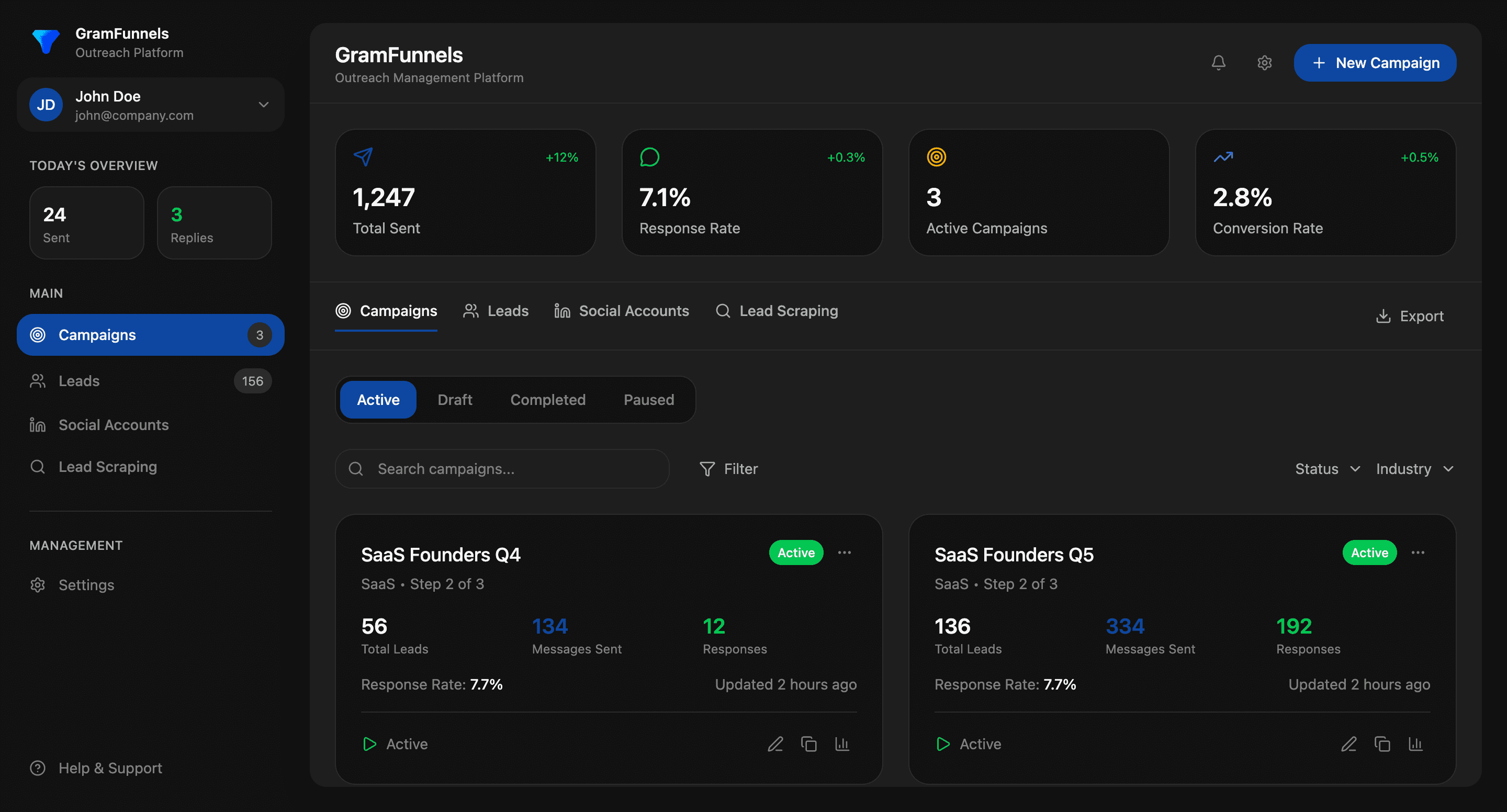
Building a scalable X outreach program requires more than just automation tools and templates. Team operations is the operational framework that determines whether your outreach efforts succeed or fail at scale.
Whether you're running a single-account campaign or managing multiple team members across dozens of accounts, how you organize, monitor, and optimize your team's activities directly impacts your conversion rates, deliverability, and account safety.
In this guide, we'll walk you through the strategic and tactical elements of team operations for X cold outreach-from planning your first campaign to scaling across multiple team members without triggering platform restrictions.
What Is Team Operations in X Outreach?
Team operations encompasses the systems, processes, and governance structures that enable your sales or marketing team to execute X outreach campaigns consistently and safely.
Unlike simply having people send DMs, structured team operations means:
- Defined roles and responsibilities: Who manages accounts, sequences, lists, and analytics?
- Standardized processes: How are sequences created, tested, and deployed?
- Compliance guardrails: How do you stay within X's platform limits and brand safety guidelines?
- Performance tracking: How do you measure success and optimize in real-time?
- Risk management: How do you protect accounts from suspension or shadowbanning?
According to data from sales automation platforms, teams with documented outreach processes see 30-40% higher response rates than those operating ad-hoc. This isn't coincidence-it's the result of consistent messaging, proper segmentation, and compliance discipline.
Planning Your X Outreach Program
Before you launch any campaign, you need a operational plan. This starts with asking fundamental questions about your program's scope and structure.
Define Your Outreach Goals and Scale
Begin by establishing clear objectives:
- How many qualified leads do you need to generate monthly?
- What's your target response rate? (Typical range: 3-8% for cold outreach)
- How many DMs per day do you need to send to hit that volume?
- Will this be a single-person operation or a multi-team effort?
This calculation directly impacts how many accounts you need and which team members should be involved. A single SDR might manage 2-3 accounts sending 50-100 DMs daily per account. A sales team scaling to 500+ daily outreach needs a different operational structure entirely.
Establish Account Architecture
One of the most critical team operations decisions is whether to use single or multiple accounts. X's terms of service permit multiple accounts, but they must be managed with care to avoid suspension.
Consider:
- Single account: Easier to manage, but limited by X's daily action caps (roughly 300-500 outreach actions per 24 hours)
- Multiple accounts: Allows scaling but requires sophisticated proxy infrastructure, account warming, and strict compliance monitoring
For most mid-market teams, running multiple accounts safely requires understanding GramFunnels' proxy infrastructure and rate-limiting capabilities to distribute activity naturally.
Build Your Process Map
Document the entire workflow:
- List creation and audience targeting
- Sequence building and template approval
- Account assignment and pacing settings
- Daily monitoring and compliance checks
- Response handling and lead qualification
- Data syncing to your CRM
- Performance reporting and optimization
A written process map ensures consistency and reduces the risk of someone accidentally violating X's guidelines or your own safety protocols.
Launching Your First Campaign
Successful launches follow a phased approach that builds confidence and validates your operational model before full-scale deployment.
Phase 1: Test and Validate
Start small:
- Use a single account with 1-2 sequences
- Send to a small list (50-100 targets) first
- Monitor response rates, delivery issues, and engagement patterns
- Collect feedback from your first responders
- Adjust messaging and pacing based on real data
This phase typically lasts 5-7 days and gives you clear signals about whether your outreach is resonating. Don't scale until you see at least 2-3% response rate and zero account warnings.
Phase 2: Optimize and Refine
Once you have positive signals:
- A/B test subject line variations or opening lines
- Refine your target audience based on early responders
- Establish your optimal daily pacing (usually 50-100 DMs per account per day)
- Create follow-up sequences for non-responders
- Build a documented playbook of what works
This is where team operations really matters. If multiple people execute this phase, they need the same guidelines so results are comparable.
Phase 3: Scale Gradually
Once you've validated your approach:
- Add a second account with the same tested sequence
- Expand your target list to higher-volume segments
- Introduce your second team member (if applicable)
- Monitor account health metrics closely during expansion
- Respect X's daily action caps to avoid triggering automated restrictions
Scaling is not a switch-it's a gradual ramp. Industry data shows teams that scale gradually see 25% fewer account issues than those that spike activity suddenly.
Managing Compliance and Account Safety
Team operations isn't just about efficiency-it's about protecting your investment. One suspended account can halt your entire program.
Implement Safety Monitoring Systems
Your team needs real-time visibility into account health:
- Daily check-ins: Monitor warnings, rate limit errors, or delivery failures
- Activity dashboards: Track sends, responses, and engagement trends
- Alert thresholds: Set rules that flag unusual patterns (e.g., sudden spike in blocks)
- Account rotation: If using multiple accounts, rotate which accounts send daily to distribute risk
Establish Compliance Checkpoints
Before every campaign launch, ensure:
- All sequences have been reviewed for brand safety and spam indicators
- Your targeting list is cleaned of inactive or bot accounts
- Daily pacing doesn't exceed safe limits
- All team members understand X's DM policies and your company's guidelines
- Your team is trained on compliance best practices specific to cold DM outreach
According to research on automation governance, teams with documented compliance checklists reduce account issues by 40%.
Create an Escalation Protocol
Define what happens when issues arise:
- Minor warning: Pause new sends on that account for 24 hours, review sequences
- Rate limiting: Reduce pacing by 50%, wait 48 hours before resuming
- Account lock: File appeal, notify leadership, shift volume to backup account
- Repeated issues: Pause entire program, conduct audit, restart with more conservative settings
Building Your Outreach Operations Team
As you scale, you'll need to define roles and ensure accountability.
Core Roles and Responsibilities
- Campaign Manager: Owns audience segmentation, sequence creation, daily performance review
- Account Manager: Monitors account health, compliance, pacing; manages account warming for new profiles
- Response Handler: Qualifies inbound responses, books meetings, hands off to sales team
- Analytics Lead: Tracks metrics, generates reports, identifies optimization opportunities
In smaller teams, one person might hold multiple roles. In larger operations, these should be distinct to ensure focus and accountability.
Training and Standardization
Every team member should understand:
- Your targeting framework and audience criteria
- The reasoning behind your messaging (why this resonates with your ICP)
- Daily pacing limits and account safety protocols
- How to qualify and route responses
- How your system connects to your CRM and sales process
Regular training on outreach metrics and KPIs ensures consistency and enables your team to spot optimization opportunities independently.
Performance Incentives and Accountability
Structure incentives around outcomes, not vanity metrics:
- Track qualified conversations started (not total DMs sent)
- Measure meetings booked per 1,000 outreach attempts
- Monitor account health (days without warnings)
- Reward sequence innovation and testing that improves results
Systems and Tools for Team Operations
Effective team operations requires the right technology stack working in harmony.
Core Technology Requirements
- Outreach automation platform: GramFunnels for X DM automation with built-in compliance safeguards
- CRM integration: Seamless syncing between X outreach and your sales stack ensures nothing falls through the cracks
- Analytics and reporting: Real-time dashboards showing response rates, conversion funnels, account health
- List management: Clean, segmented target lists with deduplication across multiple accounts
Operational Workflows
Document and automate:
- List management: How leads move from "outreach target" to "responded" to "qualified opportunity"
- Sequence deployment: Who approves sequences? What's the review process?
- Response routing: How do responses get qualified and assigned to sales reps?
- Automation rules and CRM syncing: Ensure responses automatically populate your CRM with context
Teams using formal workflows see 35% faster response times to inbound leads compared to those managing responses manually.
Scaling Across Multiple Team Members
Moving from solo outreach to a team-based operation introduces coordination challenges. Here's how to manage them.
Account Assignment Framework
Decide:
- By person: Each team member owns specific accounts (clearest accountability)
- By segment: Different team members target different ICPs or industries
- By geography: Divide by time zone or target region
Mixed approaches often work best. For example, SDR A owns accounts targeting tech founders in North America, while SDR B owns accounts targeting marketing directors in Europe.
Monitoring and Quality Control
At scale, you need visibility into what each team member is doing:
- Daily standup metrics: DMs sent, responses received, meetings booked (5 minutes)
- Weekly reviews: Sequence performance, account health, pipeline quality
- Monthly audits: Compliance check, messaging quality review, strategic adjustments
- Peer learning: Share best-performing sequences and successful response patterns with the team
Preventing Burnout and Maintaining Consistency
Outreach work is repetitive. Combat fatigue by:
- Rotating account assignments periodically
- Creating message templates so SDRs aren't writing from scratch every time
- Celebrating wins (meetings booked, deals closed)
- Allowing autonomy in how sequences are customized (within guardrails)
- Tracking quality metrics alongside volume to prevent corner-cutting
Measuring Team Operations Success
What gets measured gets managed. Focus on these operational KPIs:
Efficiency Metrics
- DMs sent per team member per day: Benchmark for consistency
- Sequences deployed and tested: Track innovation velocity
- Time to launch new campaign: From planning to first DM
Quality Metrics
- Response rate: Percentage of DMs generating replies (3-8% is healthy)
- Meeting booking rate: Qualified conversations per 1,000 outreach
- Conversation quality: Subjective but important-are responses from actual decision-makers or spam?
Compliance Metrics
- Account warnings or restrictions: Should trend toward zero
- Days between account issues: Track improved discipline over time
- Message approval cycle time: Faster review means faster iteration
Business Metrics
- Pipeline generated from X outreach: Total qualified opportunities
- Cost per qualified conversation: Investment in outreach divided by conversations started
- Win rate from X-sourced deals: Do these leads convert at your average rate?
Tracking the right metrics transforms outreach from an art into a science, enabling continuous optimization and team accountability.
Common Team Operations Mistakes to Avoid
- No documented process: Without written guidelines, each team member invents their own approach, leading to inconsistent results and compliance issues
- Scaling too fast: Jumping from 100 to 1,000 daily DMs without testing creates account risk and wastes budget on poor-performing sequences
- Ignoring account health: Treating accounts as disposable rather than assets to protect leads to preventable suspensions
- Poor response management: Letting responses pile up in DMs means missed opportunities and poor first impression
- No team training: Assuming everyone understands X's policies and your company's playbook leads to brand safety issues
- Focusing only on volume: Obsessing over DM count rather than response quality wastes budget and hurts your ICP's perception
Building Your Team Operations Roadmap
Here's a realistic timeline for developing team operations maturity:
Months 1-2: Foundation
- Plan your outreach strategy and goals
- Test initial sequences on one account
- Document your first process map
- Establish compliance monitoring baseline
Months 3-4: Scale
- Launch second and third accounts based on validated approach
- Bring on second team member if volume justifies it
- Create formal training materials
- Implement CRM syncing and analytics dashboard
Months 5-6: Optimize
- Establish performance benchmarks across your team
- Run A/B tests on sequences and targeting
- Refine account assignment and escalation protocols
- Develop advanced touch sequence strategies for higher engagement
Months 7+: Continuous Improvement
- Monitor team operations KPIs monthly
- Share learnings across team members
- Iterate on sequences based on response data
- Scale team gradually as volume demands justify investment
Key Takeaways
Team operations is the operational backbone of X outreach success. It encompasses the planning, processes, tools, and governance that enable consistent, scalable, and compliant cold DM campaigns.
The teams seeing the best results share these characteristics:
- Clear roles and responsibilities
- Documented processes and playbooks
- Strict compliance monitoring and account protection protocols
- Regular training and knowledge sharing
- Data-driven optimization and performance tracking
- Gradual scaling based on proven results
If you're running X outreach today, audit your team operations. Do you have documented processes? Is everyone aligned on targets and pacing? Are you monitoring account health daily? These foundational elements separate consistently successful teams from those burning out accounts and wasting budget.
Start with a single documented process, validate it with small-scale tests, then scale gradually while maintaining compliance discipline. That's team operations done right.